
 While many classic fairytale characters are dazzling princesses and courageous heroes, perhaps one of the most iconic and complex
characters of Slavic (of an ethnicity originating from Eastern Europe and Northern Asia) folklore is not a hero at all but, rather, an ugly,
enormous witch known as Baba Yaga. Though, despite her gruesome appearance, Baba Yaga’s many interpretations prove that there is much more to her than meets the eye.
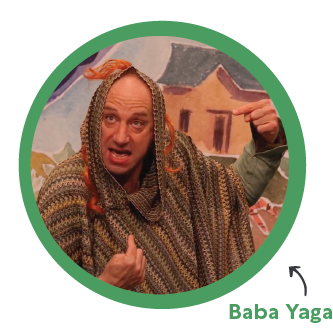
First recorded on paper in 1755, but existing in oral stories for hundreds of years, the name “Baba Yaga” derives from the Russian word for “grandmother” and “serpent,” though “yaga” is also interpreted to mean “illness,” “witch” or “evil.” The most common depiction of Baba Yaga includes her eerie cottage in the woods that rests upon chicken legs, turning, moaning and migrating throughout the forest. Famously, Baba Yaga has been said to eat children, often displayed hunched over the stove, and adorns her home with a fence of children’s bones. In lore, she also flies on a large mortar and pestle, carrying a broom to sweep behind her, erasing any trace of her.
From these descriptions, Baba Yaga’s malice certainly shines through; however, the witch’s wickedness is just one side of her. There have been over 400 adaptations of tales that involve Baba Yaga, and they don’t always feature her as a horror villain. One of the most famous Russian fairytales, Vasilisa the Beautiful, portrays Baba Yaga as an aide, saving the protagonist from her abusive stepfamily.
Musical Theater
Musical theater melds acting, singing and dancing into one all encompassing production. Singing often conveys a deeper level of emotion than speaking, allowing the characters to express themselves beyond dialogue, monologue or soliloquy. Moreover, music and movement helps establish the mood of the piece and the characters, enhancing the audience’s understanding of the story. Other examples of musical theater include Into the Woods, Hamilton and Matilda.
Storytelling
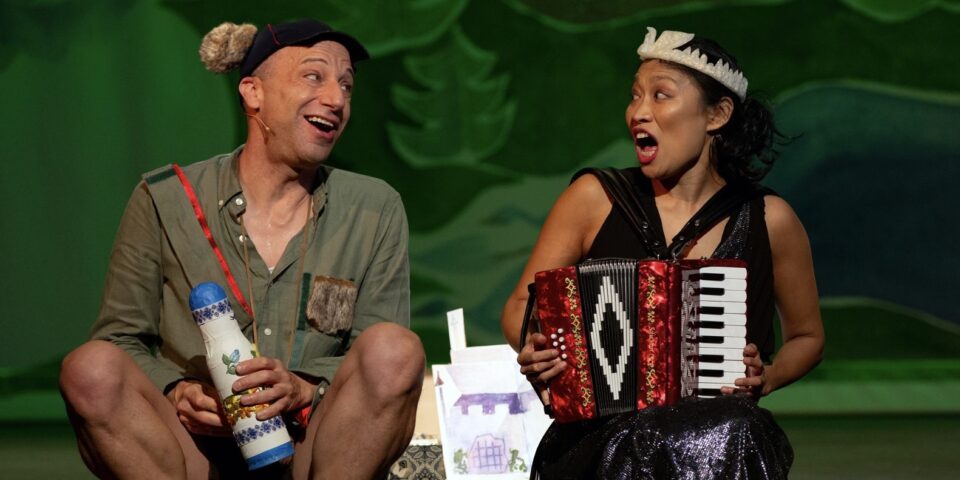
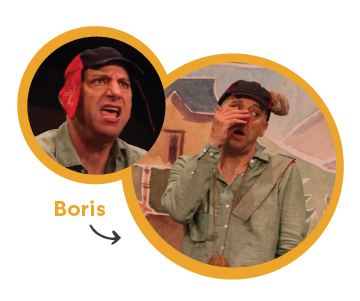
Storytelling is the art of creating a story with words and movement while encouraging the audience to use their imagination. This relationship between audience and storyteller is an ancient tradition and what makes the art of theatrical storytelling so unique. Though typically associated with language and gesture, storytelling can utilize design elements like sets, music, sound effects and props to enhance the story, establishing the mood of the world the characters inhabit and igniting the audience’s imagination. In Baba Yaga and the Firebird, two actors play multiple characters, altering their voice and physicality to switch between roles and bring a vivid, original story to life.
Puppetry
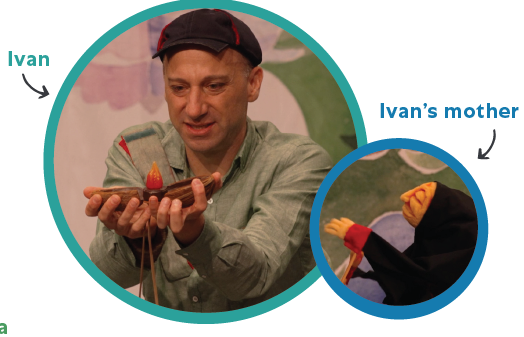
When an object is animated and manipulated by a performer, giving the illusion of independent movement, this is known as puppetry! Examples of puppetry include The Muppets, the Broadway production of The Lion King and, most recently, Little Amal, the 11.5-foot tall, partly-animatronic, giant puppet which was used as the focal point of performance art project The Walk in 2021. There are many kinds of puppets, such as marionettes, hand
puppets, rod puppets and shadow puppets. Often, puppets can be a means of representing multiple characters when there are only a few actors on stage.
Baba Bird Theater Company was founded by New Victory LabWorks alumni Anton Dudley and Faye Chiao. Dudley is a playwright and librettist, and Chiao is a composer, both with careers working in opera and musical theater. Together, they blend contemporary storytelling with classical forms to build
musical universes. Fascinated by fairy tales, they previously wrote the opera Banding Together based on The Musicians of Bremen.
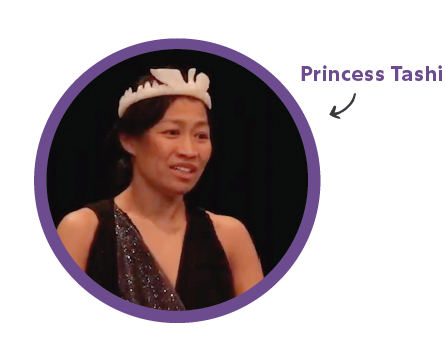
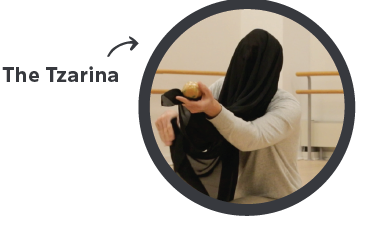
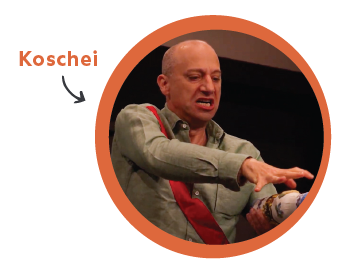
In Baba Yaga and the Firebird, Dudley and Chiao play 15 different characters between the two of them! The playwrights chose this method of storytelling to encourage the audience to rely on their imagination and lean into the play of theater.
 Faye Chiao (She/Her/Hers) is a performer and composer of musical theater, opera, and concert music. Chiao has received awards from The Presser Foundation and OPERA America. Chiao’s works have been commissioned, produced, and developed by O’Neill National Music Theater Conference, NAMT Festival of New Musicals, American Music Theatre Project, Edinburgh Fringe Festival, Houston Grand Opera, Syracuse Stage, The Duffy Institute for New Opera, Boston Chamber Symphony, O’Neill National Music Theater Conference, NAMT Festival of New Musicals, American Music Theatre Project, Edinburgh Fringe Festival, Manhattan School of Music, Prospect Theater, The Playwrights Realm, Pittsburgh Festival Opera and The New Victory Theater Labworks program. Chiao is a member of Theatre Now New York’s Musical Writers Lab and the BMI Lehman Engel Advanced Workshop. Chiao holds degrees from The Peabody Institute of The Johns Hopkins University.
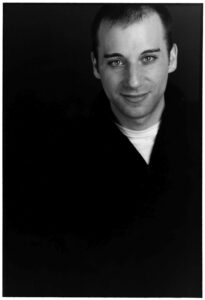 Anton Dudley (He/Him/His) is a performer, playwright, librettist for musical theater and opera, and director. His work has premiered Off-Broadway at Second Stage Theater, Playwrights Realm, Cherry Lane Theater, and Theater Row, as well as at theaters across the country, including Signature Theater, LaJolla Playhouse (co-written with Arthur Kopit), Houston Grand Opera (co-written with Faye Chiao), Williamstown Theater Festival, Walnut Street Theater, Adirondack Theater Festival, and Ensemble Studio Theater. His play Letters to the End of the World was a finalist for the 2012 Lambda Literary Award in LGBT Drama and received its premiere at Theater Row. His works are published by Vintage, Concord Theatricals , Playscripts, Applause, Heuer, Heinemann Press, Backstage Books, Smith & Kraus, and People.com, and have been released on film/video by Strand Releasing, Ouat Media, and HappiTV. As a director, Anton has directed both premieres and classics across the country, including the D.C. regional premieres of Suzan-Lori Parks’ Venus, Miguel Pinero’s Short Eyes, and Tracy Letts’ Killer Joe, and the North American premiere of Jim Cartwright’s I Licked a Slag’s Deodorant. He was co-director for the 30th Anniversary revival of Hair, which won Helen Hayes Awards for both Outstanding Resident Musical and Direction.